Wednesday, February 29, 2012

We've Moved!

We have moved our wonderful little world of wisdom and respite over here:


JOIN US.

Tuesday, July 6, 2010

Examining Emotional Eating Through Fasting


For too many of us, beginning when we were children, food was often used to soothe, comfort, reward, and console. Now as adults we have automated the reflex to eat when we feel bored, angry, depressed, anxious, stressed, or frustrated, or when we have emotional needs that are not being met. In the short term, this coping mechanism can be very effective, but if we rely on it too often, it can seem to be a nearly impossible habit to break — especially for people who struggle with their weight.
Learning how to balance our emotional relationship with food though the practice of a weekly fast is beneficial to long-term success with healthy eating and living.
People don't always know how to identify their emotional needs — or how to get those needs met once they have been identified. For example people are often prepared to admit that they eat out of boredom. If boredom is truly the eating trigger, then caloric consumption will obviously never fill that need. What is going unfulfilled might be the need for activity which means that a more suitable alternative might be taking a walk, reading a book, or doing some activity around the house. These are perfect choices if one is truly bored.
However, it is also easy at times to inaccurately identify true needs or trigger. With further analysis people often realize that boredom is really just loneliness in disguise. If you are experiencing loneliness, then none of the activities listed above will fulfill the true need, which is companionship, or at a minimum, contact with other people. Therefore, calling a friend, going out and people watching, or taking a walk to visit some neighbors would be better choices than activities like reading a book or straightening the house.
The better you get at identifying your "true need" in the moment, the better chance you have of identifying the most effective coping strategy to fulfill that need.
Of course, many people have difficulty identifying and understanding their emotional needs. Sometimes it takes practice to better understand and integrate your emotional experiences, as opposed to trying to ignore them or stuff them away with food. Here are some strategies that may help. This is the general framework for the practice of mindfulness.


Practice Emotional Awareness

Connect. Take a deep breath and close your eyes. Breathe comfortably, taking gentle and full breaths. Tune in to your body and focus on the sensations you are experiencing. Allow your stomach to rise, and then your chest. Notice your inhalation flowing past the tip of your nose and filling your lungs. Turn your attention to how your body feels in the moment without judging or interpreting. Just focus on the moment.


Observe.When you are relaxed and feeling in tune with yourself, ask yourself the following kinds of questions: What's going on? What am I sensing? What am I feeling? What am I thinking? Try to do this while maintaining the relaxation generated in the previous step.


Evaluate. Continuing in this relaxed state, think about the answers to the questions you have just posed, and based on those answers, try to tune in to your true needs.
Keep in mind that you can do this at any time throughout the day. It only takes a moment or two.


Cope in the Moment

Expressing your emotions may seem strange if you're the kind of person who is not used to "indulging" yourself by getting emotional, but it is a positive and essential part of a healthy, balanced life. There are times when emotional expression involves letting yourself cry when you are sad, or sharing your feelings with someone close to you — maybe one of your supporters. Writing in your journal is another great way to express your feelings. Exercise, or another physical activity, such as taking a walk or dancing, may also relieve emotional tension. And finally, stress management techniques, like deep breathing and meditation exercises, are excellent tools.


Pinpoint the Trigger

In addition to trying to learn as much as you can about your emotional state in the moment, it is important to identify emotional triggers. Think about what triggered your desire to eat: Was it a specific event or a conflict? A memory? Did you have a distressing thought or series of thoughts? When you pinpoint the trigger, analyze why it had that effect on you and how you might respond to it differently, without resorting to food.


Confront the Situation

Ask yourself if you need to eat. If the answer is no, then try to figure out what it is you really need. Perhaps you need to take a break from whatever you're doing and relax. Maybe you need some cheering up. It could be affection you crave, or positive affirmation. It could be the need for resolution or closure. Then again, maybe the issue is deeper than that and requires you to improve your assertiveness skills or set better boundaries. If the problem seems too big for you to handle on your own, consider seeking the help of a professional, such as a psychologist or other qualified therapist.


Consider the Alternatives

There are alternatives to emotional eating. Fall back on any other positive the coping skills you've developed in your life. Plan the steps you can take to change, accept, or cope with the emotional and unplanned eating urges you're experiencing. And work toward developing a healthy emotional state.
It takes practice to identify your true needs and emotional triggers; but with a regular weekly fasting practice you will get better and better at it, allowing you to be able to apply all of these skills in the moment and lead a healthier life.

Thursday, July 9, 2009

FastGirls Feature Food: Tamarind

(Photo: How to Peel a Tamarind Pod)


Recently I have fallen head over heels for Tamarind. Not only does the salty/sweet taste thrill me every time I pull one of the pulpy seeds into my mouth but the calming effect that it had on my digestive system sent me delving a little deeper into the possible nutritional/health benefits of this quirky looking little fruit. There was plenty to recommend it.

Among the many nutritional values and health benefits of tamarind, quite a few of these benefits stand out, namely that:

- Tamarind is a good source of antioxidants that fight against cancer. Tamarind contains carotenes, vitamin C, flavanoids and the B-vitamins

- Tamarind protects against vitamin C deficiency

- Tamarind reduces fevers and provides protection against colds

- Tamarind helps the body digest food

- Tamarind is used to treat bile disorders

- Tamarind is a mild laxative

- Tamarind lowers cholesterol

- Tamarind promotes a healthy heart

- Tamarind can be gargled to ease soar throat

- Tamarind applied to the skin to heal inflammation


Tamarindus is monotypic (having only a single species). It is a tropical tree, native to tropical Africa, including Sudan and parts of the Madagascar dry deciduous forests. It was introduced into India so long ago that it has often been reported as indigenous there, and it was apparently from India that it reached the Persians and the Arabs who called it "tamar hindi" (Indian date, from the date-like appearance of the dried pulp), giving rise to both its common and generic names. The fruit was also well known to the ancient Egyptians and to the Greeks in the 4th Century B.C.E.


Tuesday, May 19, 2009

The Best Health Insurance


"To insure good health: Exercise, walk, breathe, eat lightly, live moderately, cultivate cheerfulness and maintain an interest in life." -William Louden

Monday, May 11, 2009

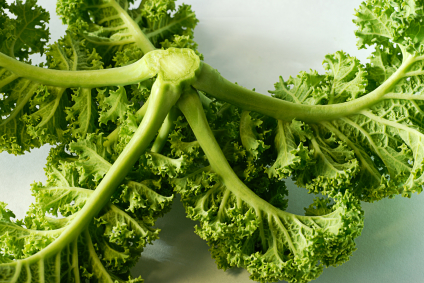
FastGirls Feature Food: Kale


Kale and collard greens are very similar. Both are considered warming , with a sweet, slightly bitter-pungent flavor similar to that of cabbage. Kale and collards are rich in iron, potassium, sulfur, beta-carotene, vitamin-C, folic acid, chlorophyll and calcium – in fact, 1 cup of kale or collard greens has more calcium than 1 cup of milk. They also contain indoles that protect against colon, breast and lung cancer.

Kale and collards have antibiotic and antiviral properties, they benefit the stomach, dispel lung congestion, rejuvenate the liver and have been used to treat arthritis, constipation, dental problems, gout, obesity, pyorrhea, skin disorders and ulcers.

Select tender, dark green or even bluish-green leaves, avoiding those that are yellowed. Kale and collard greens can be finely chopped and added to salads, steamed, stir-fried, made into soup or included in vegetable juices

Note: People with an overly acidic condition may find that kale and collards are intestinally cleansing and may therefore cause flatulence when initially being added raw into the diet. This can be prevented by adding a bit of ginger, cumin, or caraway to the greens.

Excerpted from “Rawsome: Maximizing Health, Energy, and Culinary Delight with the Raw Foods Diet” by Bridgette Mars

Wednesday, May 6, 2009

Connecting at the Threshold


Along with drinking at least sixty-four ounces of distilled, purified or filtered water and breaking the fast in a healthy and safe way, mindfulness is an essential component of our fasting. Being in each moment fully, just as it is, with compassion and without judgment, helps us to see the true perfection in all things and the truth that there is nothing but Now. We cannot fix what is past, nor can we move beyond today to some more appealing future. When we understand this, we are able to access the present moment and use for all of its inherent advantages, knowing that the answer to the critical question, the insight we've been searching for and the grace we know to be available to us, all exist in the Now.

Fasting is a particularly opportune time to practice mindfulness. While fasting we are so much more aware of our physical selves; experiencing the body as it goes from full to a gentle emptiness. So it is a natural transition to train the spotlight of that awareness on each moment of the day. Although this is a simple practice to perform, the difficulty comes in remembering to do it. We spend so much of our day focused on the past or worried about the future that it rarely, if ever, occurs to us that the gift of the present moment – the encouraging smile of the one sitting across from us or the kindness of our neighbor – is there as the answer to the prayer we've been praying for so long.

When I am having a particularly difficult time staying in the moment I do what my husband and I have termed the "threshold practice." Mindfulness practitioners all over the world have some version of this practice that they employ in an effort to stay present. It requires only that I drop into the Now each time I cross a threshold in my home. If my telephone rings and I have to go to the kitchen to answer it, I make sure that when I move through the doorway from the living room to the kitchen I am fully aware of my breath, movements, and state of mind. This has been a revealing practice in that I have caught myself being a million miles away from the spot in which I am standing, feeling anxious or melancholy, frustrated or even overly excited. Crossing that threshold allows me to reconnect with the present moment, to just be walking to the telephone. Just breathing in a normal measured pace. Just being in the safe space of my home where nothing is happening except that I am moving towards the steady ring.

Practicing in this way keeps the stress at bay, keeps me available and responsive (as opposed to reactive) when my presence or attention is suddenly needed elsewhere. It regularly leads me towards a calm where I can hear what needs to be done or said next, so I error in word and deed less frequently.

Jon Kabat-Zinn writes about his own version of the threshold practice in his seminal book on Mindfulness entitled "Wherever You Go, There You Are."


"Try to use ordinary repetitive occasions in your own house as invitations to practice mindfulness. Going to the front door, answering the telephone, seeking out someone else in the house to speak with, going to the bathroom, getting the laundry our of the dryer, going to the refrigerator, can all be occasions to slow down and be in touch with the present moment. Notice the inner feelings which push you towards the telephone or doorbell on the first ring. Why does your response time have to be so fast that it pulls you out of the life you were living in the preceding moment? Can these transitions become more graceful? Can you be more where you find yourself, all the time…..Can you make your entire day as it unfolds into an occasion to be present or to bring yourself back to the present over and over again?"

Tuesday, May 5, 2009

The influence of one who fasts


"All of the vitality and energy I have comes to me because my body is purified by fasting."
-Ghandi

Walking mile after mile in village after village in 1930's India, Gandhi, father of the Indian Independence Movement, gave people courage and hope that a better life was coming to them. Leading a resistance firmly founded in ahimsa - total non-violence - his internal strength was so powerful that weak people felt strong after seeing him and hearing his timeless wisdom. He offered his unlimited strength to both the discouraged and the sick. He brought light and love to so many who knew only darkness.

Thursday, April 30, 2009

Fast Facts: Reducing Toxicity


During a fast, the natural process of toxin excretion continues, while the influx of new toxins is reduced. This results in a reduction of total body toxicity.

According to hygienists, it is internal pollution causing so much malfunction of our vital organs, depleting minerals from our body and interfering with biochemical processes inside our cells that are crucial for our health. Accumulation of mucus, parasites and toxins in our cells is prevents nutrient absorption, polluting whole body.

Wednesday, April 29, 2009

The Trouble With Natural Healing


The trouble that we run into most often with natural modalities of healing is this:

People would rather be told that something dreadful is happening to them, something outside of their control and beyond their ability to solve, than to be assured that their poor health is a direct result of their own misguided choices. Despite the fact that they are also told that by making new choices, optimal health can be achieved. 

Someone once said, "It is easier to change a man's religion than to change his diet."


The fasting journey


This journey we are on is a miraculous one, where the days yield knowing and the nights bless with beauty.

Friday, April 24, 2009

Fasting: Faith Demonstrated


To fast is to demonstrate knowledge that there is a sustainer who already has you written in the plan.

Sunday, April 19, 2009

Diagnosis: Death by MBRF


According to Physician and Hygienist Dr. Isabelle Moser:

"Another truism of natural hygiene is that we dig our own graves with our teeth. It is sad but true that almost all eat too much quantity of too little quality. Dietary excesses are the main cause of death in North America. Fasting balances these excesses. If people were to eat a perfect diet and not overeat, fasting would rarely be necessary."

To substantiate this unfortunate reality the official journal of the American Academy of Pediatrics reported in the year 2000 that the 10 leading causes of death in the United States were, respectively, heart disease and cancer followed by stroke, chronic obstructive pulmonary disease, accidents (unintentional injuries), pneumonia and influenza, diabetes, suicide, kidney diseases, and chronic liver disease and cirrhosis. Together these leading causes accounted for 84% of all US deaths.

In a more veiled presentation, the Journal of the American Medical Association found that in that same year the second leading cause of death to Americans was something they obscurely termed “Modifiable Behavioral Risk Factors”. Later in the reported findings JAMA explains that these modifiable risk factors are more specifically observed as poor diet and physical inactivity, resulting in the death of more than 400,000 Americans in a single year. Only 35,000 less deaths than those resulting from Tobacco (also a modifiable risk factor). 

If we go again to that first AAP statistic of the leading causes of death and do even a small bit of deduction what we see is that what precipitates at least nine of these ten leading causes of death, begin in and end in the gut. More than heredity could ever claim, Americans are committing nutritional suicide, dozens of times a day, every day of our lives.

Diseases that physicians have for generations told Americans were an unfortunate part of their family inheritance turn out to simply be a case of eating too much food with too little nutritional impact. A simple matter of unchecked "Modifiable Behavioral Risk Factors."

Tuesday, April 14, 2009

The Big Trouble With "Modern" Medicine


“In the matter of disease and healing, the people have been treated as serfs. The doctor is a dictator who knows it all, and the people are stupid, dumb, driven cattle, fit for nothing except to be herded together, bucked and gagged when necessary to force medical opinion down their throats or under their skins. I found that professional dignity was more often pomposity, sordid bigotry and gilded ignorance. The average physician is a fear-monger, if he is anything. He goes about like a roaring lion, seeking whom he may scare to death.” - Dr. John. H. Tllden, Impaired Health: Its Cause and Cure, Vol. 1, 1921.

Tuesday, April 7, 2009

IT'S HERE!


Just in time for the Spring.
Get your copy (and one for a girlfriend) TODAY!

Join the New FastGirls Movement on
(see link below)
and follow TNFG on Twitter
If you would like to host a reading in the Los Angeles area, send me an email.

Monday, October 20, 2008

Fasting for Weight Loss


It's not the quick shrink that you might think.

Although you will undoubtedly lose weight when fasting for any extended period of time, here is an important fact that you should consider:

While fasting, the metabolism slows to a crawl and in some cases stops. If when you resume eating, you consume the same poor quality and excess quantities of food that you consumed before the fast, your body will be slower in metabolizing the energy for maximum use and processing out waste. This will result in rapid gains, often in excess of what you weighed before.

There is however an aspect of regular mindful fasting that can almost guarantee that once the weight is off you will be able to keep it off.

Because regular mindful fasting is the practice of being present with what is happening in the moment, FastGirls are able to recognize the difference between feelings of hunger and feelings of loneliness, excitement or anxiety, which in the emotional body often feel very much the same. With time and effort we become in tune with how to spot these subtle differences, so that we no longer have to respond to our pain by snacking or to our joy with unhealthy feasting. 

When we practice mindful fasting we are tilling the soil of our lives so that we can make fully aware choices to eat when we are hungry and stop the moment we are not. This is the real impact of fasting on our weight and waist.

Monday, October 13, 2008

On Seeking


Seek the wisdom
that will untie your knot.
Seek the path
that demands your whole being.
Leave that which is not,
but appears to be.
Seek that which is, 
but is not apparent.

-Rumi

Tuesday, September 23, 2008

What has uncontrolled hunger forced you to do?


“When a person has nothing to eat, fasting is the smartest thing he could do. When, for example, Siddhartha hadn't learned to fast, he would have to accept any kind of service before this day is up, whether it may be with you or wherever, because hunger would force him to do so. But like this, Siddhartha can wait calmly, he knows no impatience, he knows no emergency, for a long time he can allow hunger to besiege him and can laugh about it. This, sir, is what fasting is good for."

-excerpt from Siddhartha by Herman Hesse

Saturday, September 20, 2008

A Case For AND Against Organic?


Because FastGirls know that information is power, I have attached a link to an article that will give you a close up look at the Organic Food Complex. The article is extensive in length and scope but I guarantee you won't be sorry you took the time to read it. This ain't your mama's organic; a fact that can spell huge trouble for those depending on the term to insure healthy eating.

 Here is a glimpse:

The chief reason the health seeker will buy organic is for the perceived health benefits. This poses a certain marketing challenge, however, since it has always been easier to make the environmental case for organic food than the health case. Although General Mills has put its new organic division under the umbrella of its "health initiatives" group, "organic" is not, at least officially, a health, nutrition or food-safety claim, a point that Dan Glickman, then secretary of agriculture, took pains to emphasize when he unveiled the U.S.D.A.'s new label in December: organic, he stressed, is simply "a production standard."

"At first, I thought the inability to make hard-hitting health claims" -- for organic -- was a hurdle," Gekler said when I asked him about this glitch. "But the reality is, all you have to say is 'organic' -- you don't need to provide any more information." These particular consumers -- who pay attention to the media, to food scares and to articles like this one -- take their own health claims to the word.

-R. Brooks Gekler, marketing star at General Mills, parent company of Small Planet Foods and the Cascadian Farms brand


Check out the complete article here:

Monday, September 15, 2008

The Power of Collective Energy


I recently received an email from one of the FastGirls congratulating me on the growth of the group. Although I did reply with happy thanks, I want to recognize before the collective, that what we see happening is the power of each of these women coming together in diligent practice. We are creating energy through our regular commitment to fast, which is bursting outward like wild, colorful sparks.

Every time we meet the day with the intention to fast, we are saying to the universe, to ourselves, and to those near and dear to us that we intend to live mindfully. We intend to walk in a space that is always full of presence and care. When we fast we are showing God how grateful we are for an opportunity to express gratitude and welcome towards whatever shows up, knowing that we will remain luminous and secure.

I feel blessed to be able to benefit from the positive collective will of so many women. We are seeing all around us that the work of women is of great importance in our society. While others are breaking barriers in politics and science, education and business, we are setting a precedent for women all over the country and indeed around the world, that says, knowing yourself from the inside out, being able to access and act upon that which is in our highest interest, is a direct route to knowing God and collecting our bounty. 

So congratulations FastGirls, for planting seeds and cultivating a space that has already yielded fields of plenty; for us, the women we share this planet with and even those yet to be born.


"Where two or three are gathered together in my name, there I am in the midst of them." 
Matt. 18:20

you might also like ...

.